

Biomechanical parameters in lower limbs during natural walking and Nordic walking at different speeds
29 Mar 2025
Nordic Walking (NW) is a sport that has a number of benefits as a rehabilitation method. It is performed with specially designed poles and has been often recommended as a physical activity that helps reduce the load to limbs. However, some studies have suggested that these findings might be erroneous. The aim of this paper was to compare the kinematic, kinetic and dynamic parameters of lower limbs between Natural Walking (W) and Nordic Walking (NW) at both low and high walking speeds. The study used a registration system, BTS Smart software and Kistler platform. Eleven subjects walked along a 15-metre path at low (below 2 m⋅s–1) and high (over 2 m⋅s–1) walking speeds. The Davis model was employed for calculations of kinematic, kinetic and dynamic parameters of lower limbs. With constant speed, the support given by Nordic Walking poles does not make the stroke longer and there is no change in pelvic rotation either. The only change observed was much bigger pelvic anteversion in the sagittal plane during fast NW. There were no changes in forces, power and muscle torques in lower limbs. The study found no differences in kinematic, kinetic and dynamic parameters between Natural Walking (W) and Nordic Walking (NW). Higher speeds generate greater ground reaction forces and muscle torques in lower limbs. Gait parameters depend on walking speed rather than on walking style.

You may be interested in them

6 Jul 2026
What does the path to perfect technique look like? Interview with Champion Katarzyna Majewska
1 Jul 2026
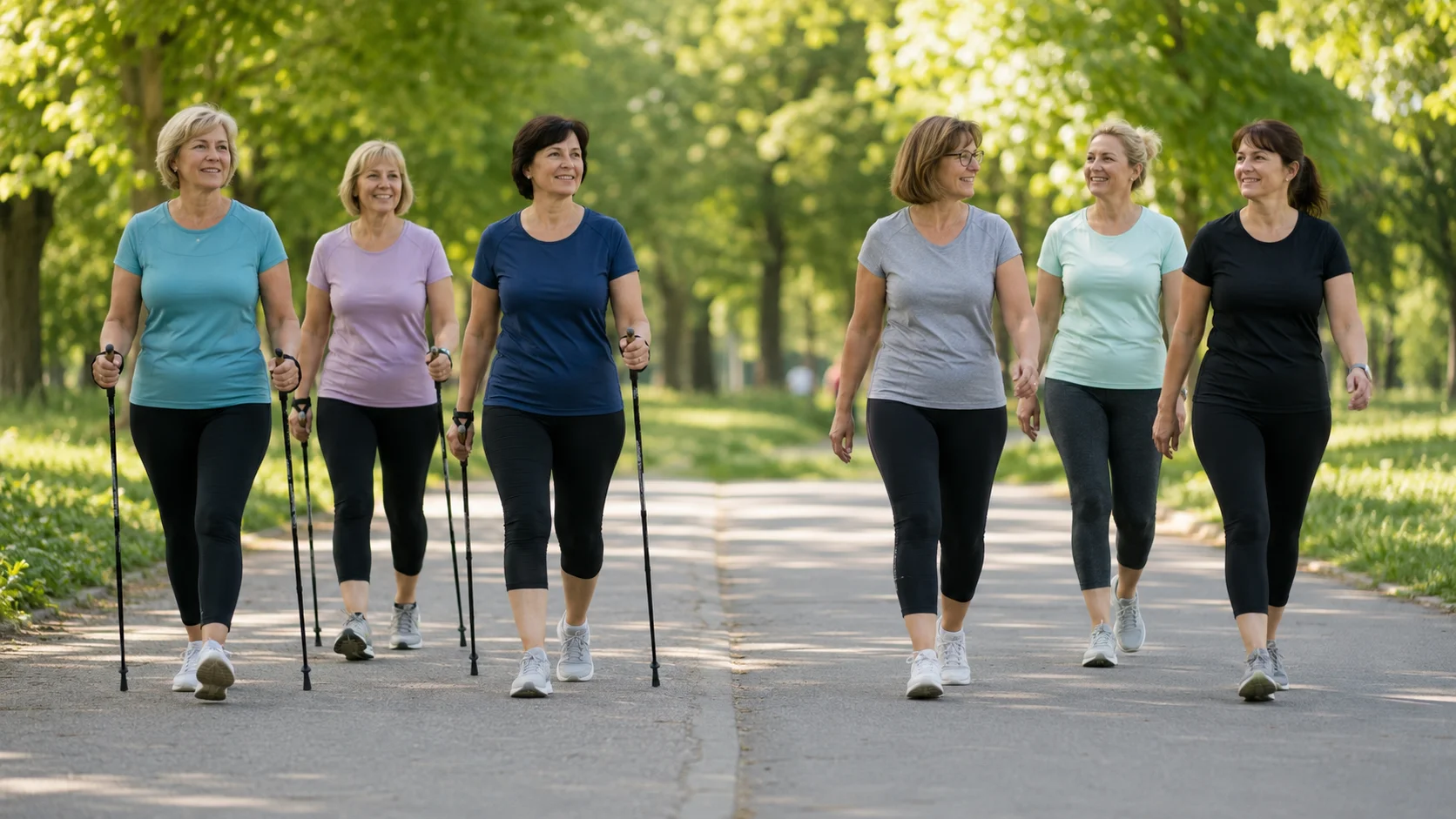
Self-guided brisk walking training with or without poles: A randomized-controlled trial in middle-aged women
1 Jul 2026
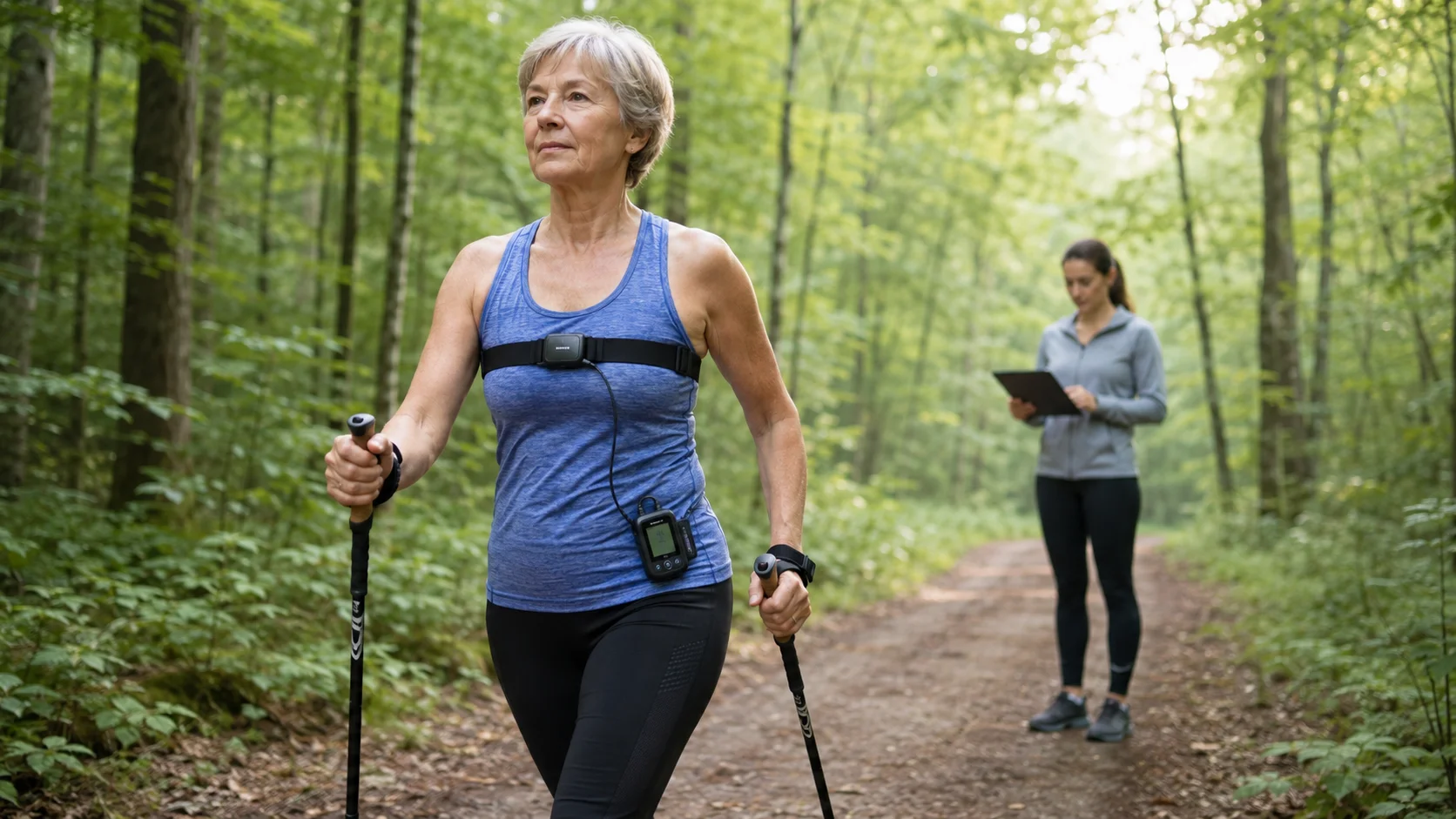
Field testing of physiological responses associated with Nordic Walking

World Original Nordic Walking Federation
Administration office:
JĘDRZYCHOWSKA 20D
65-385 ZIELONA GÓRA, POLAND
office@onwf.org


© 2024 onwf.org | Original Nordic Walking from Finland