

Conventional walking and walking uphill
20 Aug 2024
The aim of the present study was to assess differences in muscle activation and physiological responses between NW and W in horizontal and uphill walking conditions.
Nine expert Nordic Walkers performed 5-minute W and NW trials on a treadmill at 4 km / h on 0% and 15% inclines. Electromyographic activity of seven upper body muscles and five leg muscles were recorded, as well as oxygen consumption and pole strength during NW was measured.
VO2 during NW was 22.3% higher at 0% and only 6.9% higher at 15% than during W, while upper body muscle activation was 2- to 15-fold higher in both conditions. Lower body muscle activation was similarly increased during NW and W in the uphill conditions, while the increase in spinal erector muscle activity was less during NW than W. The lack of a significant increase in pole strength during uphill walking may explain the lower additional energy expenditure of NW, indicating less activation of upper body muscles to lift the body against gravity. NW seemed to reduce lower back muscle contraction in uphill conditions, suggesting that pole walking may reduce the effort to control trunk oscillations and may contribute to work production during NW.
Nine expert Nordic Walkers performed 5-minute W and NW trials on a treadmill at 4 km / h on 0% and 15% inclines. Electromyographic activity of seven upper body muscles and five leg muscles were recorded, as well as oxygen consumption and pole strength during NW was measured.
VO2 during NW was 22.3% higher at 0% and only 6.9% higher at 15% than during W, while upper body muscle activation was 2- to 15-fold higher in both conditions. Lower body muscle activation was similarly increased during NW and W in the uphill conditions, while the increase in spinal erector muscle activity was less during NW than W. The lack of a significant increase in pole strength during uphill walking may explain the lower additional energy expenditure of NW, indicating less activation of upper body muscles to lift the body against gravity. NW seemed to reduce lower back muscle contraction in uphill conditions, suggesting that pole walking may reduce the effort to control trunk oscillations and may contribute to work production during NW.
You may be interested in them

6 Jul 2026
What does the path to perfect technique look like? Interview with Champion Katarzyna Majewska
1 Jul 2026
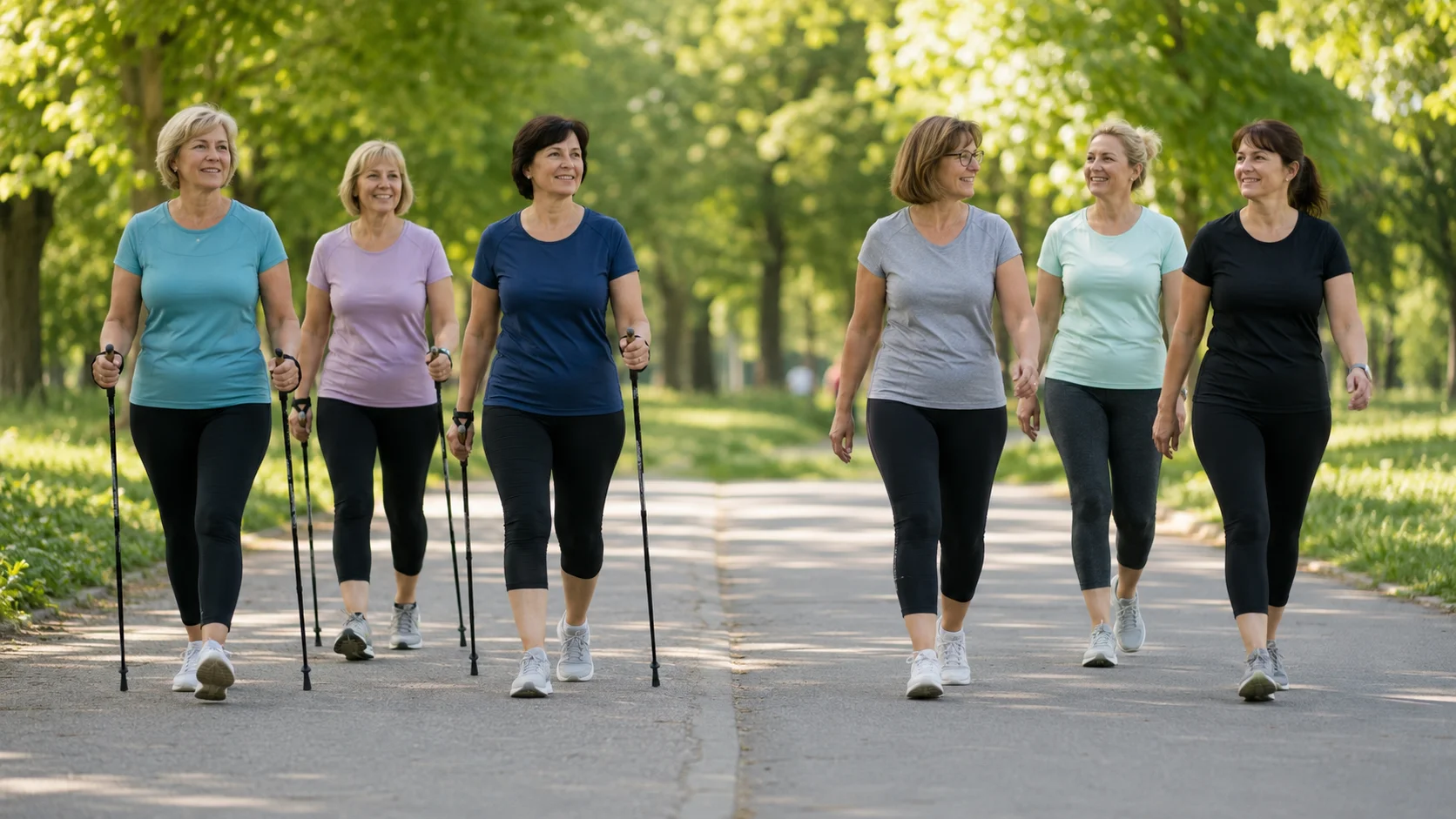
Self-guided brisk walking training with or without poles: A randomized-controlled trial in middle-aged women
1 Jul 2026
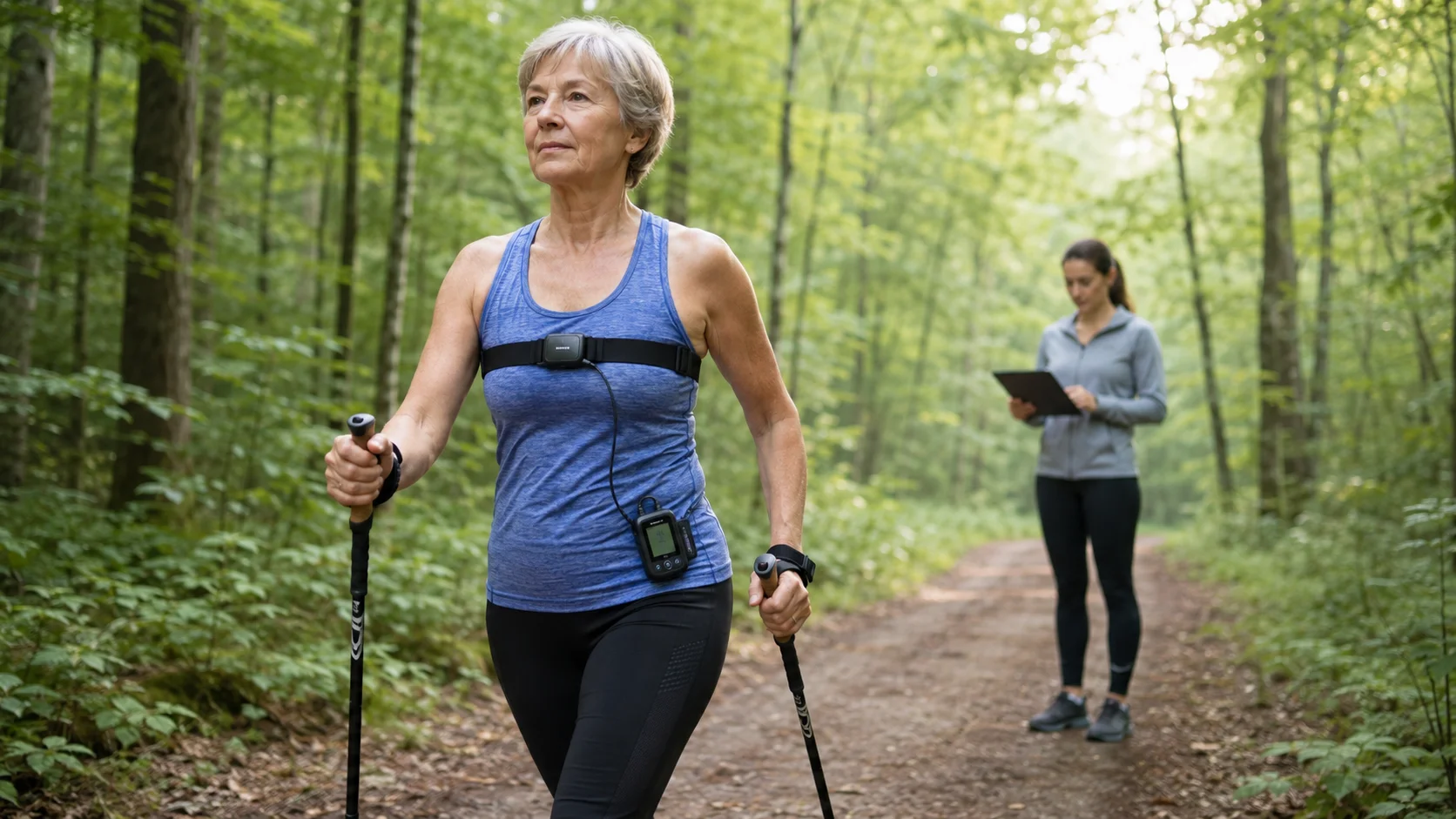
Field testing of physiological responses associated with Nordic Walking

World Original Nordic Walking Federation
Administration office:
JĘDRZYCHOWSKA 20D
65-385 ZIELONA GÓRA, POLAND
office@onwf.org


© 2024 onwf.org | Original Nordic Walking from Finland