

Nordic Poles Immediately Improve Walkinga Distance in Patients with Intermittent Claudication
29 Mar 2025
To investigate the immediate effects of Nordic pole walking (NPW) on walking distance and cardiopulmonary workload in patients with intermittent claudication.
Using a standardised treadmill test (3.2 kmh1 at 4% gradient), walking distance, cardiopulmonary responses, leg pain and perceived exertion during NPW were compared to responses evoked by normal walking in 20 patients with intermittent claudication. The distance to onset of claudication pain (claudication distance: CD) and to maximum walking distance (MWD), heart rate (HR), expired gas parameters, leg pain (Borg’s CR-10 Scale) and perceived exertion (Borg’s Rating of Perceived Exertion: RPE Scale) were compared.
CD increased significantly from a median (range) distance of 77 m (28e503) to 130 m (41e1080) and MWD increased significantly from 206 m (81e1078) to 285 m (107e1080) when patients used the Nordic poles (PZ0.000). The level of leg pain at MWD was also significantly reduced during NPW (PZ0.002). Perceived exertion atMWDdid not increase despite an increase in cardiopulmonary work, as indicated by an increase in oxygen consumption (16.5%; PZ0.000).
These results show that NPW immediately enables patients with intermittent claudication to walk further with less pain, despite a higher workload. NPW might also be a useful exercise strategy for improving the cardiovascular fitness of patients with intermittent claudication.
Using a standardised treadmill test (3.2 kmh1 at 4% gradient), walking distance, cardiopulmonary responses, leg pain and perceived exertion during NPW were compared to responses evoked by normal walking in 20 patients with intermittent claudication. The distance to onset of claudication pain (claudication distance: CD) and to maximum walking distance (MWD), heart rate (HR), expired gas parameters, leg pain (Borg’s CR-10 Scale) and perceived exertion (Borg’s Rating of Perceived Exertion: RPE Scale) were compared.
CD increased significantly from a median (range) distance of 77 m (28e503) to 130 m (41e1080) and MWD increased significantly from 206 m (81e1078) to 285 m (107e1080) when patients used the Nordic poles (PZ0.000). The level of leg pain at MWD was also significantly reduced during NPW (PZ0.002). Perceived exertion atMWDdid not increase despite an increase in cardiopulmonary work, as indicated by an increase in oxygen consumption (16.5%; PZ0.000).
These results show that NPW immediately enables patients with intermittent claudication to walk further with less pain, despite a higher workload. NPW might also be a useful exercise strategy for improving the cardiovascular fitness of patients with intermittent claudication.

You may be interested in them
6 Jul 2026
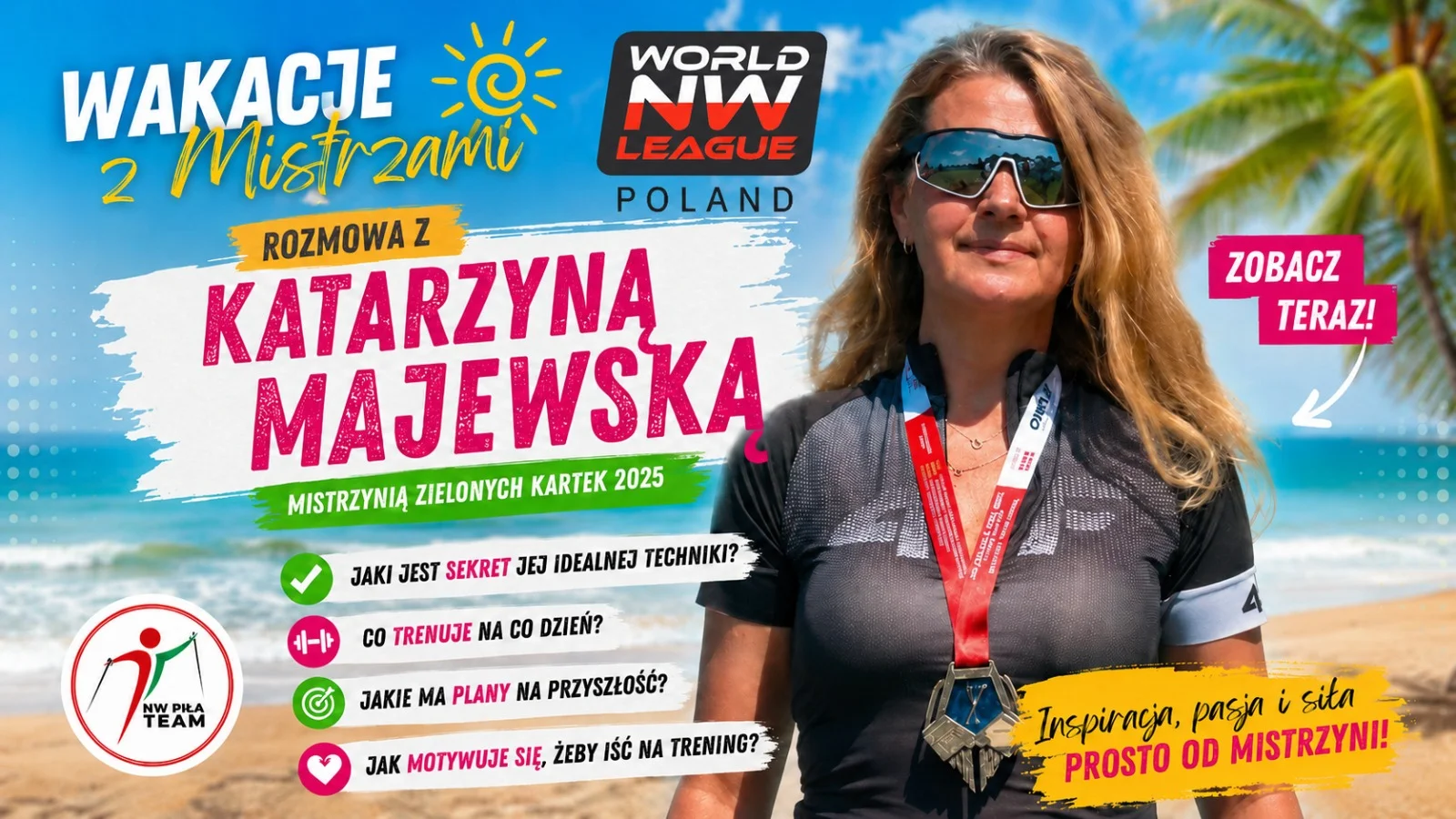
What does the path to perfect technique look like? Interview with Champion Katarzyna Majewska
1 Jul 2026
Self-guided brisk walking training with or without poles: A randomized-controlled trial in middle-aged women
1 Jul 2026
Field testing of physiological responses associated with Nordic Walking

World Original Nordic Walking Federation
Administration office:
JĘDRZYCHOWSKA 20D
65-385 ZIELONA GÓRA, POLAND
office@onwf.org


© 2024 onwf.org | Original Nordic Walking from Finland